Prof. Sundara Ramaprabhu

(Rtd) Emeritus Professor, Department of Physics
Indian Institute of Technology Madras

Scientist and teacher. Founder of the Alternative Energy and Nanotechnology Laboratory (AENL) at IIT Madras, working on nanomaterials for clean energy and the environment.

  • Advisor to Devananta R&D, KarnatakaCarbon nanomaterials based Magnetic Electrodes for Li ion and LiS Battery
  • Advisor to CATALYX HYDROGEN LLP, AhmedabadProduction of Ultra Pure (99.99999%) H2 from the combination of AWE, PEMFC for the growth of artificial diamonds (by PECVD, HFCVD Techniques)
  • Advisor to Sai Pet Reforms, KarnatakaProduction of H2 from normal ground water/seawater by AWE and CNT based electrodes for FeS Battery
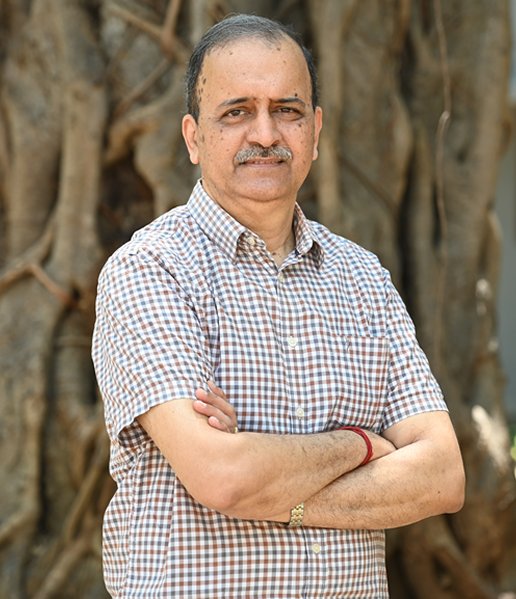
Prof. Sundara Ramaprabhu, standing with arms folded
ENERGY & NANOTECHNOLOGY LAB ⬡ IIT MADRAS ⬡ AENL est. 2001
Years in research
40+
Journal publications
460+
Patents filed
60+
PhD students guided
55
Books and chapters
10

About

I’m a scientist and a passionate teacher. In 2001 I founded the Alternative Energy and Nanotechnology Laboratory (AENL) in the Department of Physics at IIT Madras, where I have taught since 1993.

My work tries to balance fundamental studies with technology innovation in nanotechnology, mainly for energy and environmental applications. I have guided 55 PhD students, published more than 460 journal papers and filed over 60 patents. None of it came easily.

I have worked on the synthesis of high-quality carbon nanotubes, reduced graphene oxide and their composites, as well as metal oxide nanotubes, and on applying these nanomaterials to energy and the environment.

What I’m working on now

  • Green hydrogen by electrolysis of seawater, groundwater, industrial wastewater and RO reject water
  • Solid-state hydrogen storage
  • Ammonia (NH3) production from greenhouse gases
  • Secondary batteries and PEM fuel cells
  • Carbon nanocomposites for energy and the environment
  • Scientific talks

Research and expertise

I work with startups, universities, research institutes and energy researchers who want to build synthesis facilities for carbon nanotubes, graphene and metal oxide nanotubes. With a strong scientific background in manufacturing nanocomposites and catalysts, I offer scientific and technical guidance on nanocatalysts and nanocomposites that meet international quality standards.

Nanotechnology and hydrogen energy

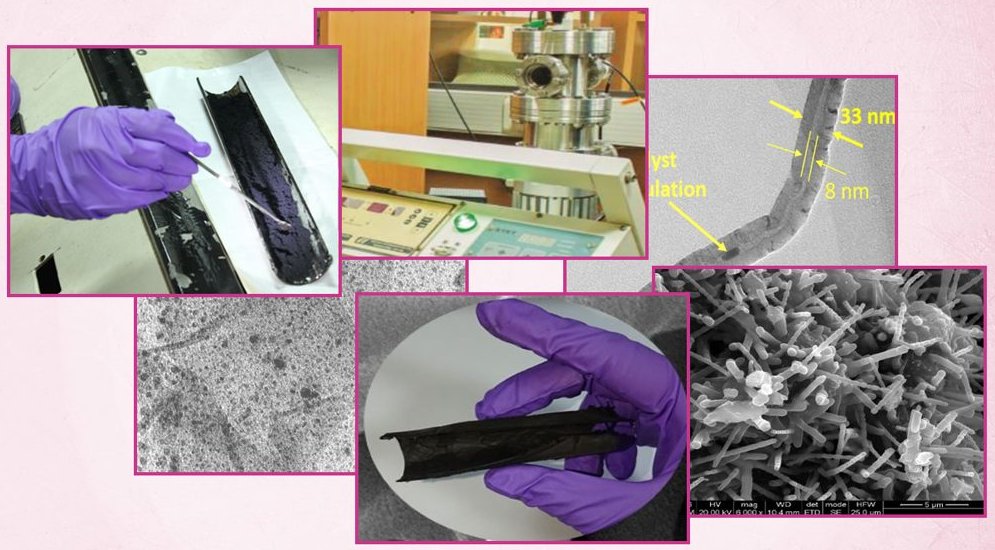
At IIT Madras we synthesise multiwalled carbon nanotubes (MWNTs) with a novel technique: catalytic decomposition of acetylene over alloy-hydride catalysts. The work extends to graphene, metal oxide nanotubes and solid-state hydrogen storage.

Sensors and energy applications

The proton exchange membrane fuel cell (PEMFC) is one of the most promising ways to convert the chemical energy of hydrogen into electricity reliably and efficiently. We develop nanostructured catalysts and electrodes for fuel cells, supercapacitors, batteries and sensors.

Nanofluids and nanolubricants

Conventional heat-transfer fluids conduct heat poorly, which limits how well heat exchangers, radiators, motors and generators can be cooled. Dispersing carbon nanomaterials in these fluids and lubricants raises their thermal conductivity.

Career

  1. 2020 – 2025

    Emeritus Professor

    Department of Physics, IIT Madras

  2. 2016 – 2020

    E. G. Ramachandran Institute Chair Professor

    Department of Physics, IIT Madras

    Hydrogen absorption in alloys, carbon nanotubes and graphene; PEMFC and DMFC; supercapacitors; batteries; biomedical applications; water purification; nanofluids.

  3. 2004 – 2016

    Professor

    Department of Physics, IIT Madras

    Hydrogen absorption in alloys, carbon nanotubes and nanomaterials; PEMFC and DMFC; supercapacitors; batteries; biomedical applications; water purification; nanofluids.

  4. 2000 – 2004

    Associate Professor

    Department of Physics, IIT Madras

    Hydrogen absorption in alloys; carbon nanotubes and nanomaterials for hydrogen storage.

  5. 1993 – 2000

    Assistant Professor

    Department of Physics, IIT Madras

    Hydrogen absorption in alloys for hydrogen storage.

  6. 1989 – 1993

    Postdoctoral Fellow, with Prof. E. A. C. Lucken

    University of Geneva, Switzerland

    Nuclear quadrupole resonance studies of 63Cu in copper(I) complexes.

  7. 1986 – 1989

    Alexander von Humboldt Fellow

    Darmstadt, Germany

    Hydrogen absorption in alloys.

  8. 1984 – 1986

    Postdoctoral Fellow

    Department of Physics, IIT Madras

    Theoretical NQR studies of halogen nuclei in inorganic solids.

Education

  • 1984 Ph.D. (Physics), IIT Madras. Thesis: theoretical NQR studies of halogen nuclei in inorganic solids.
  • 1977 M.Sc. (Physics), University of Madras. First class.
  • 1975 B.Sc. (Physics), University of Madras. First class.

Recognition

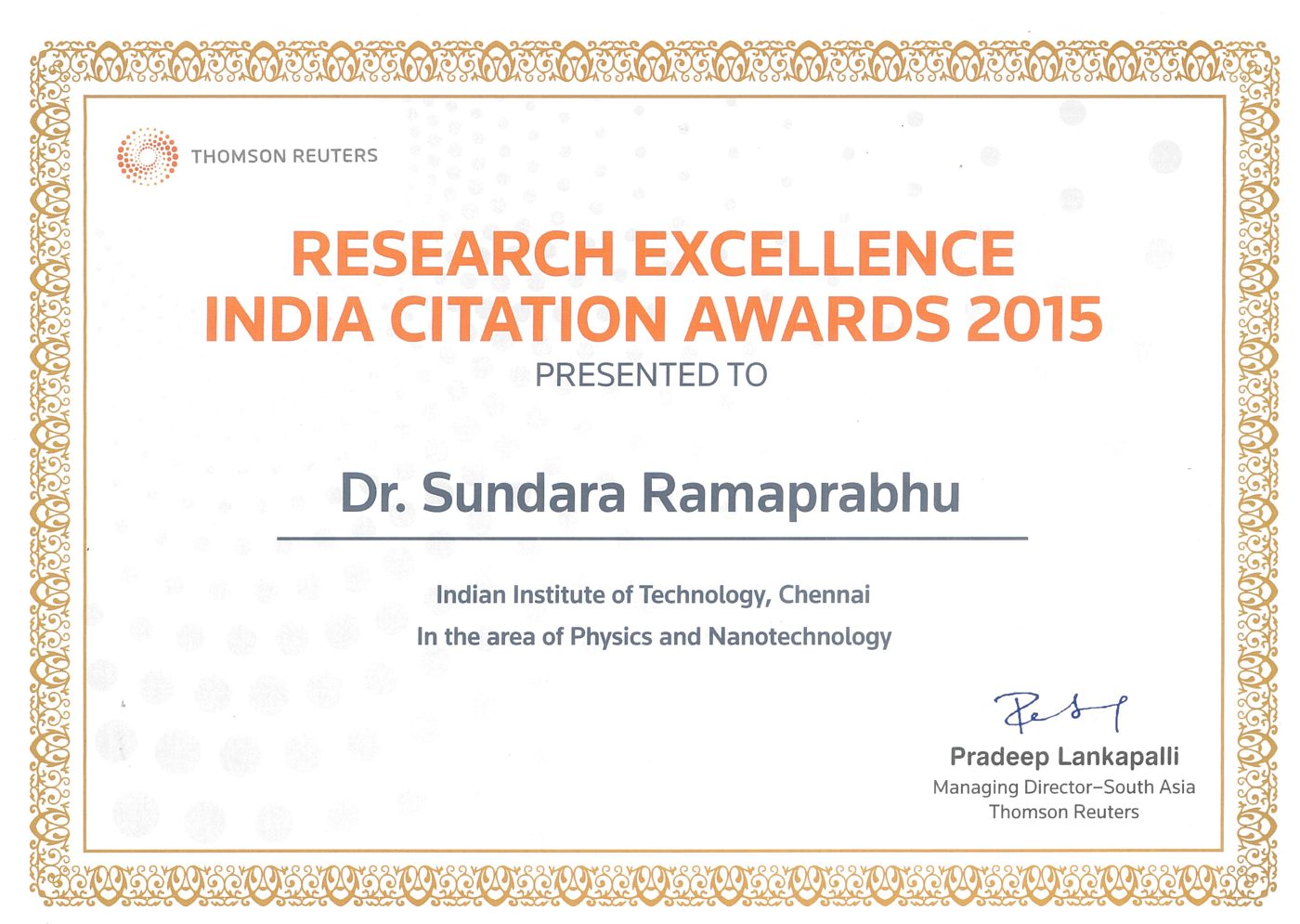
Certificate: Research Excellence India Citation Awards 2015, presented to Dr. Sundara Ramaprabhu by Thomson Reuters
Research Excellence – India Citation Award 2015, Thomson Reuters, in Physics and Nanotechnology
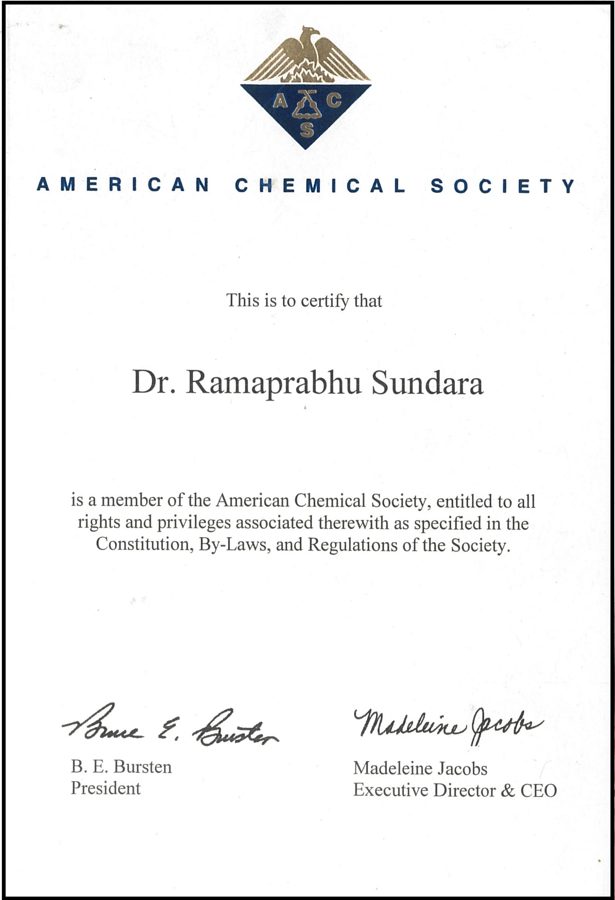
American Chemical Society membership certificate for Dr. Ramaprabhu Sundara
Member, American Chemical Society
Alexander von Humboldt-Stiftung fellowship certificate

Fellow, Alexander von Humboldt-Stiftung, Germany

Listed in Who’s Who in the World, 2009 edition

Contact

For collaborations, consulting on nanomaterial synthesis, or invitations to speak, write or call.

Email
sundararamp12345 [at] gmail.com
Phone
+91 94446 02362